
The National Retail Federation reports that Americans continue to spend billions annually on family-focused celebrations and social gatherings, reflecting how meaningful shared experiences remain a priority for many households. From birthdays and anniversaries to graduation dinners and reunion parties, home-based events have become increasingly popular because they offer familiarity, flexibility, and greater personal involvement.
Hosting a celebration at home, however, often comes with practical challenges. Limited space, unpredictable weather, seating arrangements, clutter, and guest flow can quickly affect comfort and organization. Research from Cornell University on environmental psychology suggests that well-designed social spaces influence guest interaction, mood, and overall satisfaction during gatherings. Many families now explore temporary event enhancements such as custom backdrops, lighting setups, and NYC step and repeat displays as part of creating a more structured and visually engaging celebration environment without renting a commercial venue.
Common Challenges When Hosting Family Events at Home
Home celebrations may appear simple at first, yet they require careful planning. One of the most common issues is space management. Living rooms, dining areas, and outdoor patios are often designed for everyday use rather than larger gatherings. Guests may struggle to move comfortably when furniture placement is not adjusted for the event.
Noise levels and activity overlap can also become difficult to manage. Children may need a separate entertainment area while adults prefer quieter spaces for conversation. Food preparation, gift tables, and photography areas sometimes compete for the same limited space.
Budget is another concern. Families frequently want the event to feel memorable while avoiding excessive spending. Experts from The American Society of Interior Designers note that thoughtful layout planning often creates a stronger visual impact than expensive decorations alone. Strategic organization can improve both comfort and aesthetics without dramatically increasing costs.
Step 1: Defining the Purpose and Guest Experience
The first step in planning a successful family celebration is identifying the event’s purpose. A child’s birthday party requires a different atmosphere than a retirement dinner or anniversary gathering. Defining the primary goal helps determine the tone, seating arrangements, activities, and overall setup.
Consider the guest experience from arrival to departure. Guests should understand where to enter, place gifts, sit, eat, and participate in activities. Event planners often recommend creating a simple guest journey to reduce confusion and improve flow throughout the gathering.
A practical checklist may include:
- Expected number of guests
- Age groups attending
- Indoor and outdoor space availability
- Meal or snack arrangements
- Entertainment needs
- Photography or memory-sharing areas
Research published by Harvard Business Review discussing social interaction and shared experiences suggests that environments supporting comfort and easy communication often lead to stronger emotional connections among attendees.
Step 2: Organizing Seating, Décor, and Activity Zones
Once the event purpose is clear, the next step involves dividing the home into functional zones. Organized spaces help guests feel comfortable and prevent overcrowding.
Seating Areas
Seating should encourage conversation while maintaining accessibility. Circular or semi-circular arrangements often work well for family gatherings because they support interaction. Folding chairs, rented seating, or movable benches can expand capacity without requiring permanent furniture changes.
Food and Beverage Zones
Food stations should remain separate from high-traffic pathways. Experts from The Food Network note that buffet-style layouts can reduce congestion and make serving easier during informal events.
Children’s Activity Spaces
Families with young guests may benefit from a dedicated activity area containing games, coloring supplies, or supervised entertainment. Separating active play zones from dining or conversation spaces can reduce noise and improve safety.
Decorative Elements
Décor should support the event theme without overwhelming the available space. Neutral table settings combined with targeted accent decorations often create a cleaner and more balanced visual effect than excessive ornamentation.
Lighting also plays an important role. Soft string lights, lamps, or candles can help create a welcoming atmosphere for evening events while maintaining practical visibility.
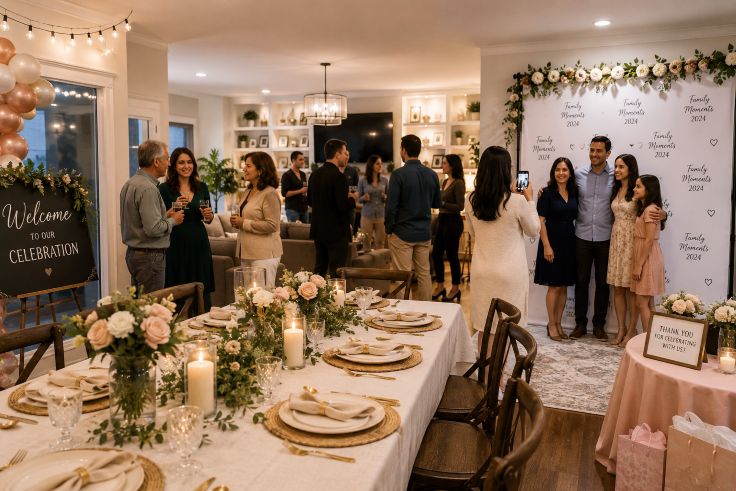
Step 3: Creating a Dedicated Photo Area for Guests
Photography has become a central part of modern celebrations. Social media sharing, family albums, and digital memory collections encourage many hosts to include a designated photo space within the event layout.
A dedicated photo area reduces crowding in dining or entry spaces while giving guests a clear location for group pictures. Studies from Pew Research Center indicate that photography and online sharing increasingly shape how people document and remember personal events.
Simple photo setups may include:
- Decorated walls or curtains
- Floral arrangements
- Balloon displays
- Printed backdrops
- Theme-based props
- Portable lighting
Positioning the photo area near natural lighting can improve image quality while reducing the need for complex lighting equipment. Outdoor patios, garden corners, or uncluttered living room walls often work well for this purpose.
Step 4: Evaluating Temporary Event-Display Options
Many families now incorporate temporary event-display materials to create a more polished appearance without investing in permanent installations. These temporary setups are especially useful for milestone celebrations such as graduations, engagement parties, or anniversaries.
Common display options include:
- Fabric backdrops
- Printed vinyl banners
- Photo walls
- Freestanding signage
- Portable lighting systems
- Custom display frames
Step-and-repeat displays, frequently used at corporate events and weddings, have also become more common in home celebrations. These backdrops create a structured photography area while helping define the event visually.
Temporary displays can offer several advantages:
- Easy installation and removal
- Improved visual consistency
- Enhanced guest photo opportunities
- Customizable event themes
- Reduced need for permanent decorations
Still, there are limitations to consider. Large displays may overwhelm smaller homes, and outdoor setups may require weather protection. Careful measurements and realistic expectations are important before selecting decorative additions.
Step 5: Managing Cleanup and Post-Event Organization
Cleanup planning is often overlooked during the excitement of preparing for a celebration. Yet organizing post-event tasks in advance can significantly reduce stress afterward.
Experts from Good Housekeeping recommend using labeled bins or disposable sorting stations during events to simplify trash collection and recycling. Keeping cleaning supplies accessible during the gathering also allows spills or clutter to be addressed immediately.
Hosts may also benefit from:
- Using washable table coverings
- Renting reusable serving equipment
- Preparing storage containers in advance
- Assigning family members specific cleanup tasks
- Breaking cleanup into smaller stages
Digital organization matters as well. Sorting photos, sharing albums, and storing decorations promptly can make future events easier to plan.
READ ALSO: How to Use Step & Repeat Banners for Birthday, Anniversary & Family Gatherings in NYC
Balancing Aesthetics, Budget, and Family Needs
Creating an event-ready home space does not require luxury-level spending. Research from The National Association of Home Builders suggests that functional layouts and adaptable spaces consistently rank among the most valued features in residential environments.
Families often achieve the best results by focusing on comfort, organization, and emotional connection rather than perfection. A thoughtfully arranged dining table, clear guest flow, and meaningful gathering spaces frequently leave a stronger impression than expensive decorative details.
Balancing practicality with aesthetics involves understanding the household’s real needs. Children may require flexible movement areas, older guests may need accessible seating, and hosts may benefit from simplified food preparation methods. Prioritizing these practical concerns helps create an enjoyable experience for everyone involved.
Home celebrations continue to evolve as families seek more personal and adaptable ways to gather. By carefully planning guest flow, activity zones, photography spaces, and cleanup strategies, hosts can transform ordinary living spaces into organized and welcoming event environments that support both memorable experiences and everyday functionality.