

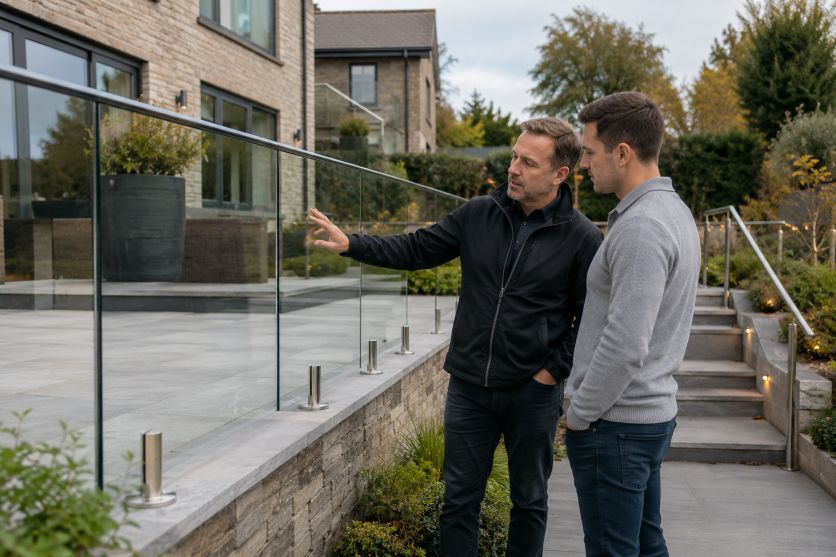
Falls are the largest cause of accidental injuries in the home, with almost 450,000 fall-related A&E attendances recorded in England during 2023, reports from RoSPA show. Children and older adults can be particularly vulnerable to hazards around steps, patios, raised terraces and changes in garden level. For households shared by different generations, outdoor safety therefore needs to be considered alongside appearance, comfort and everyday use.
Planning these features before landscaping or construction begins can prevent awkward changes later. Homeowners considering balconies, raised decking, terraces or garden steps may benefit from discussing their plans with a balustrade supplier in Yorkshire while the project is still being designed. This allows practical issues such as barrier height, materials, fixings and the needs of household members to be considered together.
1. Start With the People Who Will Use the Space
A safe outdoor area begins with understanding who will actually use it. A garden designed primarily for adults may need adjustments when young children, grandparents or visitors with limited mobility are regular users.
RoSPA identifies young children and adults over 65 among the groups particularly vulnerable to accidental injuries at home. The NHS also explains that factors such as reduced balance, muscle weakness and eyesight problems can increase the likelihood of falls as people age.
Walk through the garden from each person’s perspective. Consider whether a child could reach an unprotected edge, whether an older adult can comfortably manage the steps and whether routes remain easy to follow when daylight fades.
2. Find the Outdoor Areas That Present the Greatest Risk
Rather than adding barriers everywhere, identify where a fall or unrestricted access could cause injury. Raised patios, balconies, elevated decking, retaining structures, garden stairs and sudden changes in ground level deserve particular attention.
Guidance from RoSPA recommends considering safety rails or barriers around changes in garden level. Its garden safety advice also highlights the importance of keeping paths, patios, steps and decking level, clear and properly maintained.
Water features require separate thinking when children are present. RoSPA recommends securely fencing or covering ponds and similar features and maintaining close supervision around water. The right protective feature therefore depends on the hazard it is intended to control.
3. Compare Barrier Materials Beyond Their Appearance
Timber, metal and glass barriers can produce very different visual results, but appearance should be only one part of the decision. Strength, durability, visibility, maintenance and suitability for the supporting structure matter as well.
Glass balustrades are often selected where homeowners want to preserve views across a garden or terrace. However, glazing used as a protective barrier has a structural purpose. BSI explains that BS 6180 provides recommendations covering the design, construction, height and strength of barriers, including systems that incorporate glazing.
Use This Quick Barrier Checklist
- What specific fall or access hazard needs to be controlled?
- Will young children regularly be near the barrier?
- Would an older resident benefit from a separate easy-grip handrail?
- Is visibility across the garden important?
- How will the material cope with regular outdoor exposure?
- Are the supporting structure and fixings appropriate for the barrier?
4. Look Beyond the Barrier to the Ground Underfoot
A secure balustrade solves only part of the problem if the route beside it is uneven or slippery. Paths, stairs, decking and patios should be assessed as part of the same safety plan.
The garden safety guidance provided by RoSPA recommends keeping paths, steps, patios and decking clear, level and properly maintained. Leaves, moss and other debris should be removed because they can contribute to slippery conditions. Outdoor lighting can also make changes in level and potential obstacles easier to identify after dark.
These details can be especially useful in a multigenerational home. Easy-grip handrails can provide additional support on steps, while clearly defined walking routes reduce the need to cross uneven parts of a garden. Safety planning can also extend to choosing a family-friendly fence, particularly where boundaries need to balance privacy, secure access and the everyday needs of children and adults using the same outdoor space.
5. Check Safety Requirements Before Finalising the Design
Residential barriers should not be selected solely because they match a home’s architecture. Their location, dimensions and construction may be subject to building requirements and technical standards.
UK Government Approved Document K addresses protection from falling, collision and impact in and around buildings in England. Its guidance covers areas such as stairs, ramps and guarding. BSI describes BS 6180 as providing recommendations for barriers designed to protect people from hazards, including guidance relating to their strength and construction.
The appropriate solution can vary depending on the location and design of the project. A barrier suitable for one terrace cannot automatically be assumed appropriate for another balcony, staircase or raised garden area. Checking these details before ordering can reduce the risk of discovering design problems once installation is underway.
6. Consult a Specialist Before Ordering or Installing
The final step is to connect the household’s needs with the technical requirements of the project. This conversation is most useful before dimensions, materials and installation details have been fixed.
Provide the installer or specialist with accurate measurements, photographs and information about the supporting structure. Mention who regularly uses the area, particularly if children or older relatives are involved. Ask how the proposed barrier addresses relevant safety requirements, how it will be secured and what ongoing maintenance or inspection may be needed.
Outdoor components are exposed to weather, temperature changes and everyday wear. A system that looks appropriate when first installed still needs to remain secure and serviceable over time. Maintenance should therefore be considered during selection rather than treated as an afterthought.
A Safer Outdoor Space Starts With the Whole Picture
Choosing outdoor safety features is easier when the decision is approached as a sequence rather than a search for a single product. Start with the people using the space, identify the hazards, compare suitable materials, examine walking surfaces, check applicable requirements and seek professional input where needed.
Household needs will also change. Children grow, relatives age and mobility requirements can become different over time. RoSPA encourages homeowners to identify hazards, make appropriate changes and continue checking whether those measures remain effective.
Planning with those future changes in mind can create gardens, terraces and balconies that remain practical for different generations. Good outdoor design combines sensible barriers, stable surfaces, supportive handrails and clear access routes, creating a space that people of different ages can use with greater confidence.